Among the four pride-of-Madinah dates — Ajwa, Safawi, Mabroom, and Anbara — the Anbara variety (also spelled "Ambar" or "Amber") is the least discussed, the rarest in the Indonesian market, and arguably the most prestigious. For many Hajj and Umrah pilgrims, Anbara is the date they "look for but struggle to find" once home. This article breaks Anbara down completely: origin, physical traits, nutrition, price range, and how to choose it — so you neither buy the wrong fruit nor overpay a premium for an impostor.
What Is Anbara Date?
Anbara is a Phoenix dactylifera variety grown in the Madinah region of Saudi Arabia — the same city that gives us Ajwa and Safawi. What sets Anbara apart is size: it is frequently described as the largest-fruited date from Madinah. A quality Anbara feels substantial in the palm, with thick flesh wrapping a relatively small seed. The exterior tends to be dry to semi-dry while the interior stays soft and moist — a textural contrast that reads as luxurious.
In the family of Madinah dates, Anbara holds the "king of size" position. If Ajwa is the date tied to prophetic virtue and Safawi is the rich everyday date, Anbara is the show piece — displayed and gifted precisely for its imposing appearance. In our store, Anbara typically anchors exclusive gift sets and premium Hajj souvenirs, alongside the slender Mabroom.
Physical Traits of Authentic Anbara
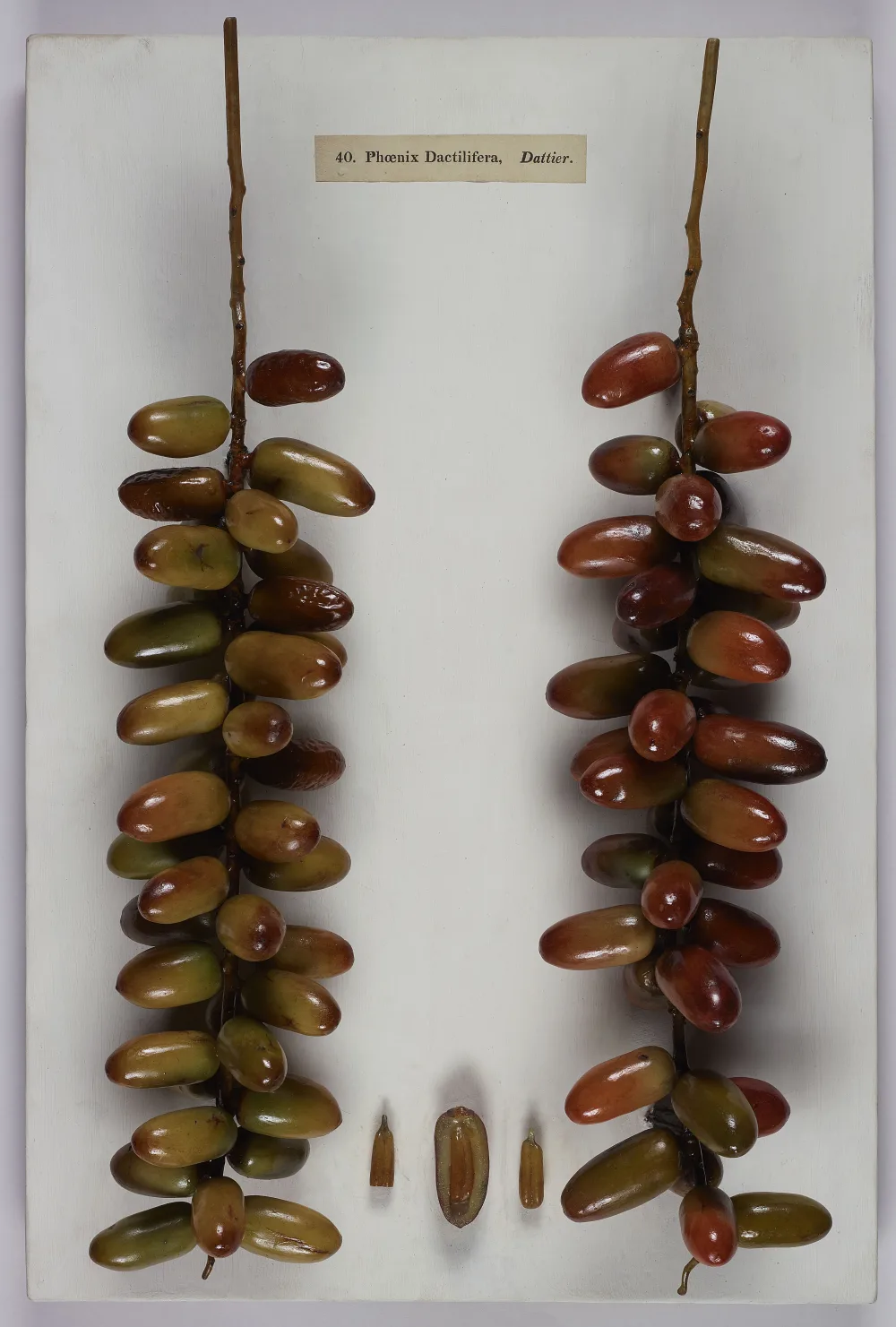
Anbara is relatively easy to recognise thanks to its striking size, but details still matter so you don't confuse it with jumbo dates from other countries (such as Egyptian/Jordanian Medjool, which is also large):
- Very large size — often 1.5–2x longer than Ajwa, with notable weight per piece.
- Colour dark brown to reddish-brown, not the jet black of Ajwa or Safawi.
- Surface slightly wrinkled and dry, contrasting the soft interior.
- Small seed relative to fruit size — a high flesh-to-seed ratio.
- Flavour deep caramel sweetness, less sharp than Sukari, with a fudge-like note when perfectly ripe.
Note: because Anbara is scarce, some sellers label any jumbo date as "Anbara". Make sure the seller clearly states a Madinah origin, not merely "Arabian jumbo dates".
Anbara Nutrition
Like other Madinah dates, Anbara is an energy-dense fruit. Since there is no dedicated USDA entry for Anbara, the figures below are conservative estimates for comparable dried dates (based on general Phoenix dactylifera profiles and ranges reported by suppliers such as Liwa Foods and references like DuHuD). Treat them as educational guidance, not an official nutrition label:
| Component (per 100 g) | Estimate | Note |
|---|---|---|
| Energy | ~280–310 kcal | Quick energy source |
| Carbohydrate | ~70–75 g | Mostly natural glucose & fructose |
| Dietary fibre | ~6–8 g | Supports digestion |
| Protein | ~2–3 g | Relatively high for a fruit |
| Fat | ~0–0.5 g | Near zero |
| Potassium | high | Supports fluid balance |
Dates generally carry a low-to-medium glycemic index — sources cited by Hello Sehat and Nutrition Journal report roughly 42–45 for certain varieties — because fibre slows sugar release. Even so, Anbara remains high in calories and total sugar, so portions matter. This article is educational, not medical advice; people with diabetes should consult a doctor or dietitian and monitor blood sugar.
Why Is Anbara Premium-Priced?
Anbara sells higher than Safawi and often matches or exceeds mid-grade Ajwa. Three drivers: large size (requires selected fruit), more limited harvest, and strong gift-market demand. For reference, Indonesian outlet RCTI+ reported premium Madinah dates at roughly 60–80 riyal (~IDR 240,000–320,000) per kg in that period, and on Indonesian marketplaces "amber" dates are often offered from IDR 72,000 to 249,000 per 500 g depending on quality and seller.
| Pack | Estimated Retail Range | Best for |
|---|---|---|
| Anbara 250 g (gift) | IDR 90,000–150,000 | Personal gift, taste test |
| Anbara 500 g | IDR 150,000–280,000 | Family use, souvenir |
| Anbara 1 kg | IDR 280,000–450,000 | Stocking up, large hampers |
| Anbara Exclusive Gift Box | varies | Corporate gifts, prestige Hajj souvenir |
Anbara vs Other Madinah Varieties
| Aspect | Anbara | Ajwa | Safawi | Mabroom |
|---|---|---|---|---|
| Size | Very large | Small–medium | Medium | Long, slender |
| Colour | Dark reddish-brown | Jet black | Glossy black | Dark brown |
| Texture | Dry outside, soft inside | Soft, slightly dry | Chewy, thick flesh | Chewy, drier |
| Position | Prestige/gift | Prophetic virtue | Everyday, rich | Elegant, gift box |
Storage and Serving
Because the interior is soft, store Anbara in an airtight container away from direct heat and humidity. For long storage (beyond a month) in Greater Jakarta's hot, humid climate, the refrigerator is the safe choice; let it sit briefly before serving so the texture returns to its best. Anbara is wonderful served whole as a special guest treat, or stuffed with almonds/walnuts for a luxurious hamper touch. As part of our Madinah dates line, Anbara complements the variety guide and Hajj souvenir sets we curate for Greater Jakarta buyers.
Health Benefits of Anbara
Because its nutrition profile resembles other Madinah dates, the benefits commonly attributed to Anbara align with those of dates in general. Some are supported by real content, while stronger claims still need further research — so we present them carefully and educationally:
- Quick energy source. Natural glucose and fructose make Anbara an energy-restoring snack, especially when breaking a fast. Because the fruit is large, a single piece is already satisfying.
- Supports digestion. Dietary fibre (around 6–8 g per 100 g) aids bowel movement and satiety.
- Rich in potassium. This mineral supports fluid balance and muscle function; many nutrition references highlight potassium as a date strength.
- Natural antioxidants. Like other dark dates, Anbara contains phenolic compounds that act as antioxidants.
Worth underlining: Anbara's large size means one piece contributes more calories and sugar than one Safawi or Ajwa. If you watch sugar intake, factor this into your daily portion. Again, this article is educational and not a substitute for professional health advice.
Who Should Buy Anbara?
Anbara makes the most sense for three buyer groups. First, gift-givers who want a luxurious impression — Anbara's large fruit speaks for itself without excessive packaging. Second, Hajj and Umrah pilgrims who want a distinctive Madinah souvenir different from the now-common Ajwa; Anbara adds variety and exclusivity. Third, date lovers completing their four-variety Madinah experience to compare texture and flavour directly. For everyday eating on a tight budget, Safawi may be more practical; but for special moments, Anbara is hard to beat.
Conclusion
Anbara is Madinah's hidden gem: large, luxurious, and rare. If you want a date that impresses recipients at first sight — or wish to complete your collection of all four Madinah varieties — Anbara deserves priority. Just buy from a provider transparent about Madinah origin and grade, so the premium you pay is genuinely worth it.