When buying Madinah dates, you will inevitably encounter grade terms: Grade A, AA, AAA VIP, up to Jumbo or VVIP. Many buyers assume these are just marketing labels. In fact, the grading system is a real way to classify quality — and understanding it helps you compare offers fairly and avoid paying a premium for a lower grade. Interestingly, most online articles only discuss Ajwa grades. Yet as a Madinah set house, we see grading applying — with adjustments — across all four varieties: Ajwa, Safawi, Mabroom, and Anbara. This is the cross-variety Madinah grading guide.
What Does Grade Actually Measure?
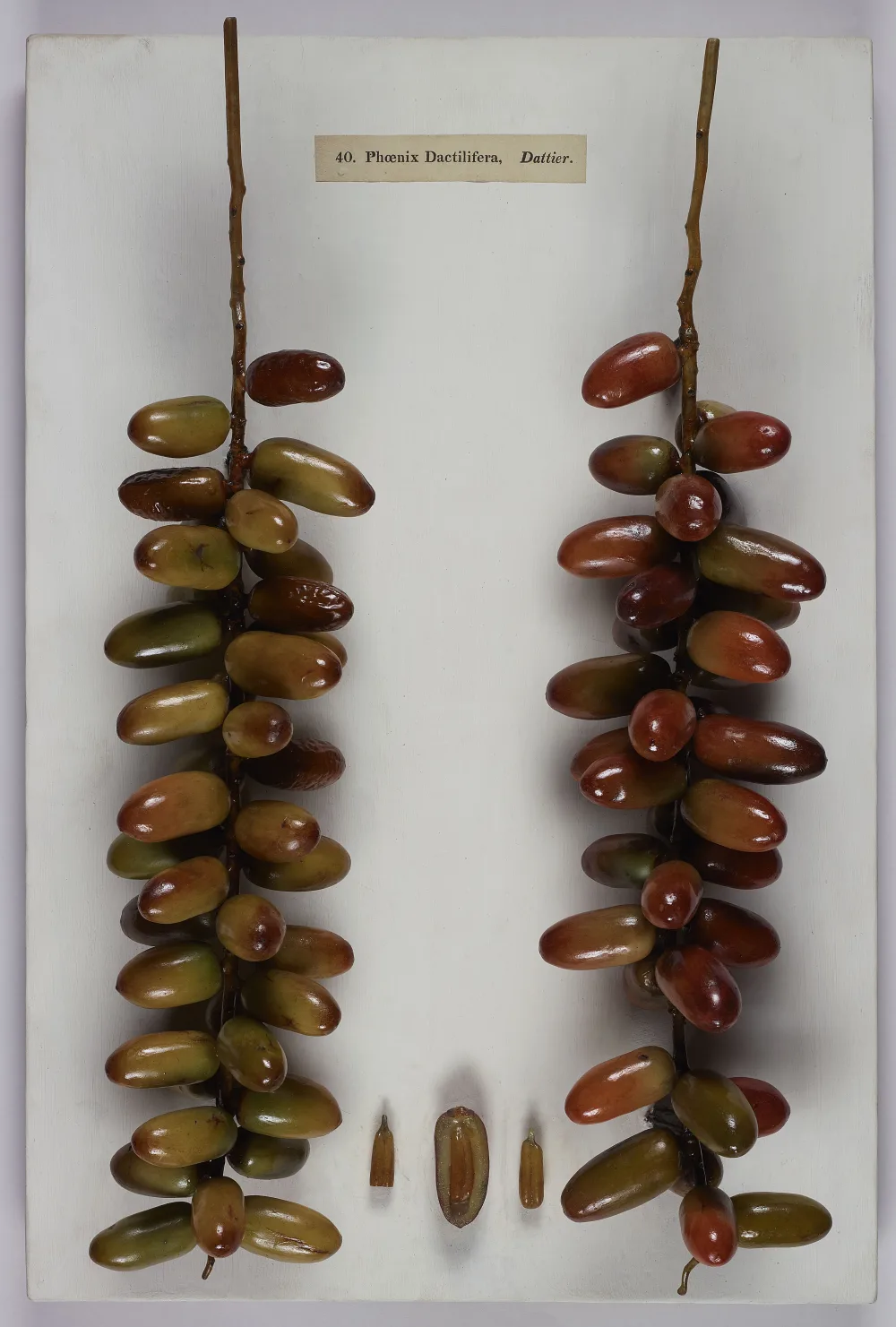
Contrary to common belief, date grade mainly assesses fruit size and uniformity, not "authenticity" or "nutrition." Two dates of different grades from the same variety are essentially the same fruit botanically; what differs is size selection, shape neatness, and visual consistency. Factors generally considered:
- Fruit size — larger means a higher grade.
- Uniformity — evenly sized fruit looks more premium and neat.
- Physical integrity — minimal defects, splits, or excessive wrinkling.
- Cleanliness and appearance — consistent colour and sheen.
Because grade does not change varietal identity, a Grade A date is still authentic — merely smaller or less uniform than AA/AAA. This matters so you don't equate "low grade" with "fake."
The Standard Grade Ladder
Based on the system used by established suppliers in Malaysia, the general grade ladder for Madinah dates is roughly as follows:
| Grade | Key Character | Position |
|---|---|---|
| Mini / C | Small fruit, sometimes drier | Economical |
| Grade A | Standard size, reasonably uniform | Regular |
| Grade AA | Larger and neater | Mid-premium |
| AAA VIP | Large premium fruit, very uniform | Premium |
| VVIP / Jumbo | Largest fruit, top class | Super-premium |
A 2026 supplier catalogue, for example, marks "Ajwa AAA VIP" as the top jumbo and "Safawi AAA Jumbo" as a large premium class, while mid-tiers (Ajwa A/AA, Safawi AA) sit at more affordable price ranges.
How Does Grade Apply to Each Madinah Variety?
This is the rarely discussed part. Because each variety's physical character differs, grade application is nuanced:
| Variety | Grade Application | Note |
|---|---|---|
| Ajwa | Full ladder (A → AAA VIP/Jumbo) | Most tiers due to high demand |
| Safawi | Usually AA and AAA/Jumbo | Focus on size and flesh thickness |
| Mabroom | More often distinguished by size/length | Slender shape is the selling point; fewer formal grade terms |
| Anbara | Few tiers; already large-fruited | Sold by size, premium by default |
The implication: for Ajwa and Safawi, ask for the grade explicitly (A/AA/AAA). For the already-large Mabroom and Anbara, focus on size and physical uniformity, since both tend not to have a grade ladder as detailed as Ajwa's.
Grade vs Price: Why It Matters
Grade differences directly affect price. For Ajwa, for instance, the gap between Grade A and AAA VIP can reach tens of percent. Here is an illustration (estimated ranges, subject to change):
| Ajwa Grade | Price Range/kg | For Whom |
|---|---|---|
| Grade A | IDR 200k–250k | Daily use, sharing |
| Grade AA | IDR 250k–320k | Premium use, gifts |
| AAA VIP / Jumbo | IDR 320k–400k+ | Luxury gifts, special impression |
The practical lesson: if your goal is daily consumption or bulk sharing, Grade A is already more than adequate and far more economical. Pay the premium for AAA VIP/Jumbo only when large, uniform appearance genuinely matters — such as for gifts or hampers.
How to Read Grade Offers Smartly
- Ask for the specific grade — avoid sellers who only say "premium" without naming A/AA/AAA.
- Ask "how many pieces per kg" — a practical size indicator; fewer pieces per kg means larger fruit.
- Compare the same grade across sellers, not different grades, for a fair price comparison.
- Beware high-grade claims at very cheap prices — these may be inconsistent grade naming.
- Match grade to need — the most expensive is not always the most suitable.
Grade and Authenticity: Two Different Things
It bears repeating: grade speaks to quality/size, while authenticity speaks to whether the dates are genuinely from Madinah and of the claimed variety. An authentic Ajwa Grade A is far more valuable than a "Jumbo Ajwa" that turns out to be a blended date. So beyond understanding grade, also verify authenticity — especially for Ajwa and Anbara. Our guide on authentic-date traits complements this grade understanding so your buying decision is complete on both fronts: quality and authenticity.
Quality Factors Beyond Grade
Grade is an important indicator but not the only determinant of your satisfaction. Several other quality factors deserve attention so you don't fixate on the label alone. Freshness and harvest date matter — dates from a more recent harvest tend to be softer and more aromatic, so ask how fresh the stock is, especially for soft-textured varieties. Storage and cold chain matter too — well-stored dates (controlled temperature and humidity) keep their texture and avoid mould, and a direct importer with proper storage usually safeguards this. Moisture content affects both eating experience and shelf life: too dry turns hard, too moist risks spoilage. Finally, varietal purity — ensure the dates are not blended with similar-looking varieties; this concerns authenticity, not grade. In other words, two AAA-grade dates can taste different if one is fresher and better stored, so the seller's reputation and stock handling are as important as the grade label on the pack.
A Smart Madinah Date Buyer Checklist
Use this simple checklist to decide well without being swayed by marketing terms: (1) Variety — Ajwa, Safawi, Mabroom, or Anbara, and confirm Madinah origin; (2) Grade — A, AA, AAA VIP, or Jumbo, asked specifically; (3) Size — how many pieces per kg, a real size indicator; (4) Freshness — how recent the stock or harvest is; (5) Price — compare per gram for the same grade across sellers; (6) Purpose — for consumption, gifts, or hampers, matching the grade accordingly. For daily consumption, prioritise freshness and price; for gifts, prioritise grade and appearance; for all, ensure authenticity and Madinah origin.
Conclusion
The Madinah date grading system is not just a label but a real classification of size and uniformity that affects price. Understanding the grade ladder (A to VVIP/Jumbo), how its application differs across Ajwa, Safawi, Mabroom, and Anbara, and the quality factors beyond grade makes you a smart buyer — able to choose a grade by need, compare prices fairly, and never confuse a low grade with fake dates. As a Madinah set house, we provide a range of grades across all four varieties so you can choose precisely. Grade reference: an established Malaysian Madinah-dates supplier catalogue (2026).